This week two British so-called “quality newspapers”, The Telegraph and the i (a little like El Mundo/ABC and 20 Minutos/El País in Spain), both reported on the trials and tribulations of Britons trying to sell property in Spain. Astonishingly, they managed to do so while barely mentioning Brexit. By Eugene Costello
Poor British guiris — or expats, as they like to call themselves.
They are not expats.
The difference between an expat and an immigrant is intention. Immigrants move somewhere intending to build a life there permanently. Expats are normally sent abroad for a defined period: diplomats, corporate employees, international managers. They work on fixed contracts and usually return home — or move on to another posting — when those contracts end.
Brexpats – or immigrants?
Most Britons living in Spain are not expats. They are immigrants who prefer a more flattering label.
One article from 2023 quotes a small band of proud Brexit-supporting Britons living in Spain.
“I voted for Brexit from Spain and I’m pleased we did what we did.”
Philip Smalley, retired publican from Preston, now living in Spain
Among them is Philip Smalley, a retired pub owner from Preston who has lived in Spain for seventeen years and remains a fervent supporter of leaving the EU.
The only small mercy is that he no longer runs a pub because he would be just like Al Murray’s pub landlord, with a jukebox that only played music by white British bands.
Another interviewee, Michael Stevenson, who lives near Málaga, explained the reasoning.
“We were very aware of putting our country first, unlike people here who were worried about how it would affect them. We were concerned with the sovereignty of the UK.”
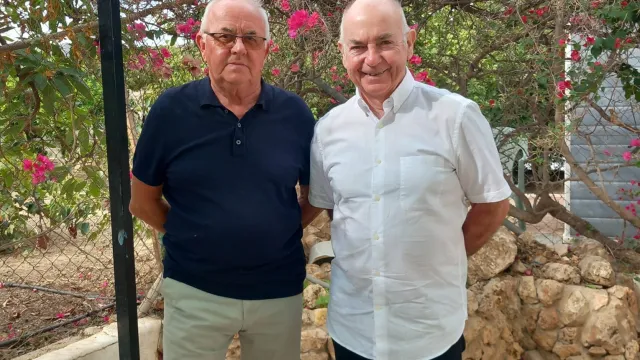
Brexiteers living in Spain Philip Smalley, right, and Michael Stevenson
He added: “I am quite pleased that we did what we did. We will have the last laugh when Europe falls apart.”
This, of course, is the moment when Oscar Wilde’s famous line about Little Nell springs to mind:
“You would have to have a heart of stone not to laugh.”
Because the cognitive dissonance here is extraordinary.
Nobody in Spain voted for Brexit.
Nobody in Spain asked for Brexit.
Brexit was a thoroughly British production — conceived, financed and delivered entirely in the UK.
Yet six years later we are presented with articles describing the difficulties British property owners face in Spain — fewer buyers, more bureaucracy, residency complications — while tip-toeing delicately around the obvious cause.
It is a little like describing the consequences of a shipwreck while carefully avoiding mentioning the iceberg.
Or, to put it another way, blaming Spain for Brexit is rather like blaming Mary-Jane Kelly for being murdered by Jack the Ripper.
Spain didn’t stab the victim.
Britain did — and now some of the mourners are wondering why the body is cold and showing signs of decomposing.
What Brexit Actually Changed
Brexit did not simply change a flag on a passport. It changed the legal framework that governs how Britons can live, work and own property inside the European Union.
Before 2020, British citizens enjoyed the same rights as any other EU citizen. They could move freely, stay indefinitely, work without permits, access healthcare systems and buy property without additional bureaucratic hurdles.
Those rights disappeared overnight.
Britons are now legally classified as third-country nationals — the same category as Americans, Canadians or Australians.
That change has consequences.
The most visible is the 90-day rule. British visitors can now spend only ninety days in any 180-day period within the Schengen Area unless they obtain residency. For many property owners who once spent half the year in Spain, that alone has altered the appeal of keeping a home here.
There is also bureaucracy. Residency permits, proof of income requirements, private health insurance and tax registration now form part of the process for those wishing to stay long-term.
And then there is the buyer pool.
For decades British buyers were one of the largest groups in Spain’s coastal property markets. But since Brexit the pool of potential British purchasers has inevitably shrunk, because buying a home here no longer automatically means the right to live here.
In other words, the market changed.
And when a market changes, prices follow.
The Myth of the Last Laugh
I am pretty well arraigado in Ruzafa, Valencia. I know many people in my barrio and speak almost daily with my Spanish nurses and doctors. One once told me, “ahhhhhhh y por cierto eres un guiri raro aquí pero para mi (nosotros) eres genial y no tienes tu familia de sangre ,pero te has hecho parte de la nuestra,te queremos (te quiero)“ Enviado desde mi iPhone
“ You might be a self-described weird guiro but for me (us) you are brilliant and you might not have have your blood family here, but you have become part of ours. We love you – and I love you.
I am well known in these parts, largely because I am always accompanied by Gili, my chocolate labrador. We even have a stammtisch in a favoured local bar.
I speak to many Spaniards. And the myth that the Spanish love the Brits is a bulo, or bullshit in other words. They despise the louts of Benidorm, especially, and there was widespread support for Socialist Prime Minister Pedro Sánchez’s proposal to bring in a 100% property tax on non-EU immigrants. It’s a shame he hasn’t done so yet for reasons of parliamentary arithmetic.
But when Brexiteers say the UK will have the last laugh, I can assure all the gammons that they are not laughing with them.
They are laughing at them.
British citizens remain one of the top groups of foreign property buyers in the Valencian Community, with data indicating they represent approximately 9.9% to 12.3% of foreign transactions in the region.
Recently, they have been overtaken by US citizens: they are increasingly buying property in Valencia, with some reports showing they account for roughly 11% to over 14% of foreign buyers in certain areas. Driven by remote work and retirement, interest from the US has surged, with a 40% increase in buyers noted in the region recently. Key areas include Ciutat Vella, Quatre Carreres and the leafy suburbs packed with chaleteros, the middle-classes who like to live in villas with high hedges, pools and little local community spirit.
Preferred areas include La Canyada, l’Eliana, Moncada and so on, half an hour’s drive out of the city and close to the fee-paying American School of Valencia.
The other day, I took a taxi to Hospital Doctor Peset. My driver, Jorge, had actually been delivered there as a baby. We chatted away.
He said, “No odio a los británicos, salvo a los guiris de Benidorm que se niegan a hablar español o a integrarse en nuestra cultura. Es una nueva forma de colonialismo. Pero lo que es peor son los yanquis que están llegando a cántaros. Venden una casa en California por uno o dos millones, así que cuando llegan pagan 500.000 € por una vivienda que antes costaba 250.000. Y mientras tanto, en barrios como Ruzafa o el Cabanyal, los precios suben como la espuma y los jóvenes valencianos ven cómo la ciudad donde nacieron se les escapa de las manos.Para un español con un sueldo normal no hay competencia posible; el sueño de ser propietario se convierte en… castillos en el aire.”
I do not hate the British, except for the Benidorm guiris who refuse to speak Spanish or integrate into our culture. It is a new form of colonialism. But even worse are the Americans who are arriving in droves. They sell a house in California for one or two million. So when they arrive they pay €500,000 for a home that used to cost €250,000. And meanwhile, in neighbourhoods like Ruzafa or Cabanyal, prices are rising like foam. Young Valencians see the city where they were born slipping out of their hands. For a Spaniard on an ordinary salary there is no possible competition. The dream of owning a home becomes… castles in the air.
So there we have it. Brexit — an act of self-harm against the UK’s national interest. The gift that keeps on taking.
Brits in Spain. Not liked. Some of them hated.
Farage can have that as a slogan for Reform.
And yet not as despised as the flood of recently arrived Americans.